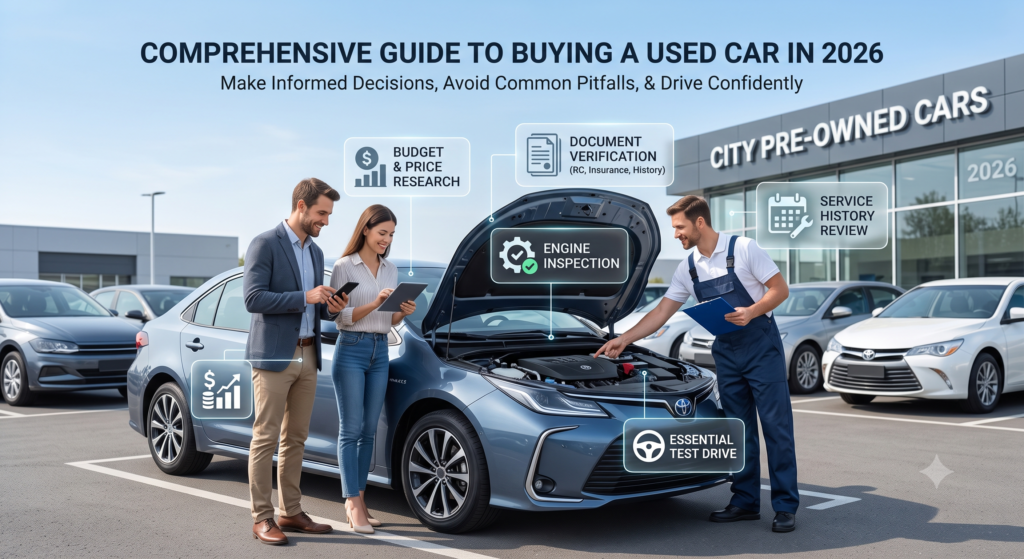
Complete Guide to Buying a Used Car in 2026
Buying a vehicle is an exciting milestone, but not everyone wants or needs a brand-new car. Buying a used car has become an increasingly popular option because it offers excellent value for money while providing access to reliable vehicles at affordable prices. Whether you’re purchasing your first car or upgrading your current one, understanding the process of buying a used car can help you make a confident and informed decision.
The used car market has grown rapidly over the last few years, offering buyers thousands of options across different brands, models, and price ranges. However, purchasing a pre-owned vehicle also comes with certain risks. Hidden mechanical issues, incomplete paperwork, and overpriced listings can turn a great deal into an expensive mistake.
This comprehensive guide will walk you through every important step of buying a used car, helping you avoid common pitfalls and choose a vehicle that meets your needs and budget.
Why Buy a Used Car?
One of the biggest reasons people consider buying a used car is affordability. A pre-owned vehicle typically costs much less than a new one while still offering many of the same features.
Some advantages include:
- Lower purchase price
- Reduced insurance premiums
- Slower depreciation
- Greater variety within your budget
- Lower registration costs in many regions
- Opportunity to buy higher-end models for less
For many buyers, a well-maintained used car delivers excellent value without the financial burden of purchasing a brand-new vehicle.
Determine Your Budget Before Shopping
Before you begin searching for vehicles, establish a realistic budget.
Remember that the purchase price is only part of the total ownership cost.
Consider expenses such as:
- Insurance
- Registration fees
- Fuel costs
- Maintenance
- Repairs
- Road taxes
- Loan repayments (if financing)
Creating a complete budget helps you avoid overspending and ensures you choose a vehicle you can comfortably maintain.
Choose the Right Type of Vehicle
Different drivers have different needs.
Think carefully about how you plan to use the vehicle.
City Driving
Small hatchbacks are often ideal because they offer:
- Easy parking
- Better fuel economy
- Lower maintenance costs
- Affordable insurance
Family Use
Families may benefit from:
- SUVs
- Crossovers
- Sedans with spacious interiors
- Vehicles with advanced safety features
Highway Travel
Drivers covering long distances should prioritize:
- Comfortable seating
- Excellent fuel efficiency
- Reliable engines
- Cruise control
- Large luggage space
Selecting the right vehicle category is one of the most important steps in buying a used car.
Research the Vehicle Model
Never purchase a vehicle without researching its history and reputation.
Read reviews about:
- Reliability
- Maintenance costs
- Fuel efficiency
- Spare part availability
- Safety ratings
- Owner experiences
Some models are known for long-term reliability, while others may have recurring mechanical issues.
Spending time on research can save you thousands in future repairs.
Inspect the Exterior Carefully
A thorough visual inspection provides valuable clues about the vehicle’s condition.
Look for:
- Rust
- Paint inconsistencies
- Dents
- Scratches
- Panel gaps
- Broken lights
- Windshield cracks
Uneven paint may indicate previous accident repairs.
Check whether all doors open and close smoothly.
Inspect the tires for uneven wear, which could indicate alignment or suspension problems.
Examine the Interior
The interior often reveals how well the previous owner maintained the vehicle.
Check:
- Seats
- Dashboard
- Steering wheel
- Air conditioning
- Power windows
- Infotainment system
- Instrument cluster
- Seat belts
Ensure every electronic feature functions correctly.
Excessive wear on pedals or the steering wheel may suggest higher mileage than advertised.
Inspect the Engine Bay
Even if you are not a mechanic, you can still identify warning signs.
Look for:
- Oil leaks
- Coolant leaks
- Broken hoses
- Corrosion
- Loose wiring
- Dirty engine components
A clean engine is not always a good sign.
Sometimes sellers clean the engine shortly before selling to hide leaks.
If possible, bring a trusted mechanic during inspection.
Verify Vehicle Documents
Proper documentation is essential when buying a used car.
Always verify:
- Registration certificate
- Insurance documents
- Service history
- Pollution certificate (where applicable)
- Owner identification
- Loan clearance documents
- Original purchase invoice if available
Confirm that the chassis number and engine number match the official documents.
Never purchase a vehicle with incomplete paperwork.
Review the Service History
A complete service history shows that the vehicle has been maintained properly.
Look for records of:
- Oil changes
- Brake servicing
- Tire replacement
- Battery replacement
- Engine repairs
- Suspension maintenance
Regular servicing generally indicates responsible ownership.
Vehicles with missing maintenance records should be inspected more carefully.
Check the Mileage
Mileage plays an important role in determining vehicle value.
However, lower mileage alone does not guarantee a better vehicle.
A properly maintained car with moderate mileage may be a better purchase than a neglected vehicle with unusually low mileage.
Compare:
- Vehicle age
- Service records
- Tire condition
- Interior wear
These factors help confirm whether the mileage appears genuine.
Take a Test Drive
Never skip the test drive.
Drive the vehicle under different conditions.
During the drive, evaluate:
Engine Performance
The engine should start easily and accelerate smoothly.
Steering
Steering should feel responsive without excessive vibration.
Braking
The brakes should stop the vehicle smoothly without unusual noises.
Suspension
Drive over speed bumps to check suspension comfort.
Transmission
Automatic or manual gear changes should feel smooth.
Noise Levels
Listen carefully for:
- Engine knocking
- Suspension noises
- Wheel bearing sounds
- Brake squeaks
Any unusual noise deserves further inspection.
Get a Professional Inspection
Even experienced buyers can overlook hidden mechanical issues.
Hiring a certified mechanic for a pre-purchase inspection is often worth the investment.
A professional inspection can identify:
- Engine problems
- Transmission faults
- Accident repairs
- Frame damage
- Suspension wear
- Brake issues
This provides greater confidence before finalizing the purchase.
Compare Market Prices
Never purchase the first vehicle you see.
Compare prices across multiple sellers.
Factors affecting price include:
- Model year
- Mileage
- Condition
- Ownership history
- Service records
- Optional features
Researching market value helps you negotiate effectively.
Negotiate the Price
Negotiation is a normal part of buying a used car.
Use inspection findings during negotiation.
For example:
- Tire replacement needed
- Minor paint damage
- Upcoming service
- Worn brake pads
Remain polite and realistic.
Successful negotiation benefits both buyer and seller.
Avoid Common Mistakes
Many buyers make preventable errors.
Avoid these common mistakes:
Buying Without Research
Always compare multiple models.
Ignoring Service Records
Maintenance history matters.
Skipping the Test Drive
A short drive can reveal major issues.
Trusting Verbal Promises
Obtain everything in writing.
Rushing the Purchase
Take time to inspect every detail.
Financing a Used Car
Many banks and financial institutions offer loans for pre-owned vehicles.
Before applying:
- Compare interest rates
- Understand loan terms
- Calculate monthly payments
- Review processing fees
Choose financing that fits comfortably within your budget.
Benefits of Certified Pre-Owned Vehicles
Certified Pre-Owned (CPO) vehicles often include additional benefits.
These may include:
- Manufacturer inspection
- Warranty coverage
- Roadside assistance
- Quality certification
- Better resale value
Although CPO vehicles usually cost slightly more, they often provide greater peace of mind.
Frequently Asked Questions
Is buying a used car worth it?
Yes. A well-maintained used car offers excellent value and significantly lower depreciation compared to a new vehicle.
What documents should I verify?
Always check the registration certificate, insurance, service records, ownership history, identification documents, and any loan clearance paperwork.
Should I buy from a dealer or an individual seller?
Both options have advantages. Dealers may offer warranties or certified vehicles, while private sellers sometimes provide lower prices. Evaluate the vehicle’s condition, documentation, and transparency before deciding.
How important is a test drive?
A test drive is essential. It helps identify problems with the engine, brakes, steering, suspension, transmission, and overall driving comfort.
Can I negotiate the price?
Yes. Most used car purchases allow room for negotiation, especially if you identify maintenance issues or required repairs.
Conclusion
Buying a used car can be one of the smartest financial decisions when approached carefully. By setting a budget, researching vehicle models, inspecting the car thoroughly, verifying documents, reviewing the service history, and taking a proper test drive, you greatly reduce the chances of making an expensive mistake.
Patience is the key to finding the right vehicle. Do not rush into a purchase simply because a deal appears attractive. Compare multiple options, ask questions, and seek professional advice whenever necessary.
With proper planning and careful inspection, buying a used car becomes a rewarding experience that provides reliable transportation, excellent value for money, and long-term satisfaction.