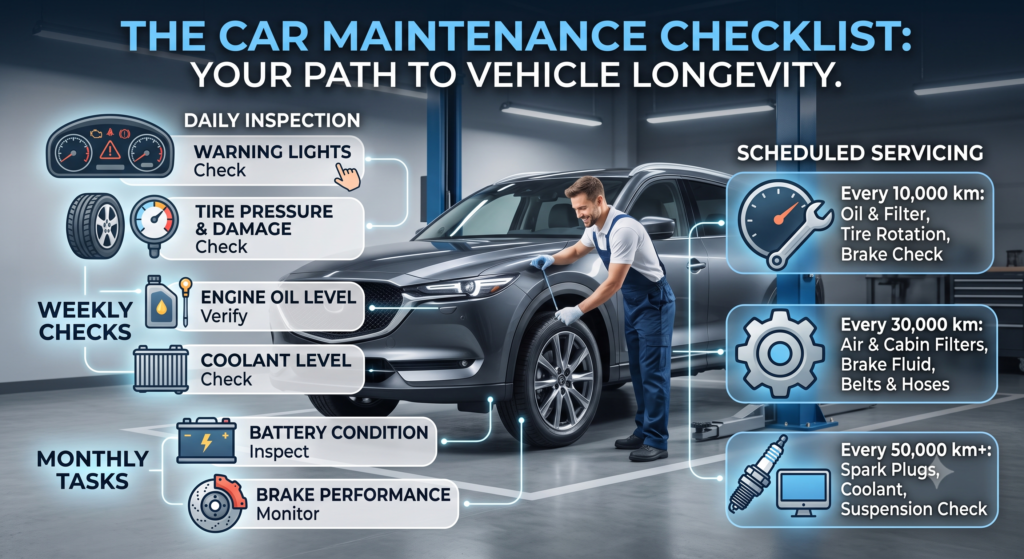
Car Maintenance Checklist Every Owner Should Follow
Owning a car is a significant investment, and taking proper care of it ensures that it remains reliable, safe, and efficient for years to come. A well-maintained vehicle not only delivers better performance but also reduces the chances of unexpected breakdowns and expensive repairs. Following a car maintenance checklist is one of the easiest ways to protect your investment and enjoy a smoother driving experience.
Many vehicle owners wait until something goes wrong before visiting a service center. However, preventive maintenance is always more affordable than repairing major mechanical failures. Whether you drive every day or only occasionally, following a regular car maintenance checklist helps keep every important component in excellent condition.
This comprehensive guide covers everything every car owner should know about maintaining a vehicle, from daily inspections to yearly servicing.
Why Regular Car Maintenance Is Important
Regular maintenance keeps your vehicle operating safely and efficiently. Ignoring small issues can eventually lead to costly repairs that could have been prevented.
Some of the biggest benefits of following a car maintenance checklist include:
- Improved fuel efficiency
- Better engine performance
- Longer vehicle lifespan
- Increased resale value
- Improved road safety
- Lower repair costs
- Greater driving comfort
Routine maintenance also helps identify potential problems before they become serious.
Daily Car Maintenance Checklist
Some inspections take only a few minutes but can prevent major problems later.
Check for Warning Lights
Before driving, start the engine and observe the dashboard.
Ensure there are no warning lights such as:
- Check Engine Light
- Oil Pressure Warning
- Battery Warning
- Brake Warning
- Tire Pressure Warning
Never ignore warning indicators, as they often signal developing mechanical issues.
Inspect the Tires
Your tires are the only part of the vehicle that touches the road.
Check:
- Tire pressure
- Visible damage
- Cuts
- Nails
- Uneven wear
Proper tire pressure improves:
- Fuel economy
- Handling
- Braking performance
- Tire lifespan
Always follow the pressure recommended by the manufacturer.
Check for Fluid Leaks
Before moving your car, inspect the ground underneath.
Look for:
- Engine oil
- Coolant
- Brake fluid
- Transmission fluid
Small leaks can quickly become expensive repairs if left untreated.
Weekly Car Maintenance Checklist
Weekly inspections require only a few extra minutes but greatly improve reliability.
Check Engine Oil
Engine oil lubricates internal engine components.
Low or dirty oil may cause:
- Increased engine wear
- Poor performance
- Higher fuel consumption
- Engine overheating
Use the dipstick to verify both oil level and oil condition.
Replace oil according to the manufacturer’s service schedule.
Check Coolant Level
The cooling system prevents the engine from overheating.
Low coolant levels can cause:
- Engine overheating
- Reduced performance
- Serious engine damage
Only check coolant after the engine has cooled completely.
Inspect Windshield Washer Fluid
Good visibility is essential for safe driving.
Ensure the washer fluid reservoir remains filled.
Replace worn windshield wipers if they leave streaks or fail to clean properly.
Clean the Vehicle
Washing your vehicle does more than improve appearance.
Regular cleaning helps:
- Prevent rust
- Remove road salt
- Protect paint
- Maintain resale value
Don’t forget to clean the windows, mirrors, headlights, and taillights.
Monthly Car Maintenance Checklist
Monthly inspections help detect wear before it becomes a safety concern.
Check Battery Condition
The battery supplies electrical power to start the vehicle.
Inspect for:
- Corrosion
- Loose terminals
- Damaged cables
- Low battery charge
A weak battery can leave you stranded without warning.
Most car batteries last between three and five years, depending on usage and climate.
Inspect Brake Performance
Brakes are among the most important safety systems.
Pay attention to:
- Squeaking noises
- Grinding sounds
- Soft brake pedal
- Vehicle pulling during braking
- Increased stopping distance
If you notice any of these symptoms, schedule a brake inspection immediately.
Check Tire Tread Depth
Worn tires reduce traction, especially on wet roads.
Replace tires when tread depth falls below the legal safety limit in your region.
Adequate tread improves:
- Cornering
- Braking
- Water evacuation
- Overall road grip
Inspect Lights
Verify that all exterior lights work correctly.
Check:
- Headlights
- Brake lights
- Indicators
- Reverse lights
- Fog lamps
- Number plate lights
Proper lighting improves visibility and keeps you compliant with road regulations.
Every 5,000–10,000 Kilometers
Many manufacturers recommend additional servicing during this interval.
Typical maintenance includes:
- Engine oil replacement
- Oil filter replacement
- Tire rotation
- Brake inspection
- Suspension inspection
- Steering inspection
Following these recommendations helps extend engine life.
Every 20,000–40,000 Kilometers
As mileage increases, additional components require attention.
These include:
Air Filter Replacement
A dirty air filter reduces engine efficiency.
Replacing it improves:
- Engine performance
- Fuel economy
- Acceleration
Cabin Air Filter Replacement
A clean cabin filter improves air quality inside the vehicle.
Benefits include:
- Cleaner interior air
- Better air conditioning performance
- Reduced dust
- Improved passenger comfort
Brake Fluid Inspection
Brake fluid absorbs moisture over time.
Old brake fluid reduces braking performance.
Replacing it according to the manufacturer’s schedule helps maintain safe braking.
Every 50,000 Kilometers and Beyond
Higher-mileage vehicles require more detailed inspections.
Service items may include:
- Spark plug replacement
- Transmission fluid replacement
- Coolant replacement
- Suspension inspection
- Wheel alignment
- Fuel system cleaning
Always follow the maintenance schedule provided in your owner’s manual.
Seasonal Car Maintenance Tips
Different seasons affect vehicle performance in different ways.
Summer Maintenance
Hot weather places extra stress on the cooling system.
Before summer:
- Check coolant
- Inspect air conditioning
- Verify tire pressure
- Test battery condition
Monsoon Maintenance
Rain increases road hazards.
Before the rainy season:
- Replace worn wipers
- Check tire tread
- Test headlights
- Inspect brakes
Good visibility and reliable braking are especially important during wet conditions.
Winter Maintenance
In colder climates:
- Check battery health
- Inspect antifreeze
- Monitor tire pressure
- Warm the engine gently before driving
Winter maintenance helps prevent cold-weather starting problems.
Keep the Interior Well Maintained
Vehicle maintenance isn’t limited to mechanical components.
A clean interior improves comfort and preserves resale value.
Regularly:
- Vacuum carpets
- Clean seats
- Wipe the dashboard
- Clean touchscreens
- Remove trash
- Use interior protectants where appropriate
A well-maintained cabin creates a more enjoyable driving experience.
Common Maintenance Mistakes to Avoid
Many vehicle owners unintentionally shorten their car’s lifespan.
Avoid these common mistakes:
Ignoring Warning Lights
Dashboard warnings should never be ignored.
Skipping Scheduled Service
Routine servicing prevents expensive future repairs.
Driving with Low Tire Pressure
Underinflated tires reduce fuel efficiency and wear out faster.
Delaying Oil Changes
Old engine oil loses its protective properties.
Ignoring Strange Noises
Unusual sounds often indicate developing mechanical problems.
Address them early before they become costly repairs.
Signs Your Car Needs Immediate Service
Schedule a service appointment if you notice:
- Engine overheating
- Excessive exhaust smoke
- Difficulty starting
- Poor fuel economy
- Vibrations while driving
- Steering problems
- Brake noise
- Fluid leaks
- Burning smells
- Transmission slipping
Prompt repairs can prevent more serious damage.
Frequently Asked Questions
How often should I service my car?
Most manufacturers recommend servicing every 5,000 to 10,000 kilometers or every six to twelve months, depending on the vehicle and driving conditions.
Why is engine oil so important?
Engine oil lubricates moving parts, reduces friction, helps control engine temperature, and protects against wear.
How often should tires be rotated?
Tires are commonly rotated every 8,000 to 10,000 kilometers, although you should follow the schedule recommended by your vehicle manufacturer.
Can regular maintenance improve fuel efficiency?
Yes. Clean filters, properly inflated tires, fresh engine oil, and a well-tuned engine all contribute to better fuel economy.
Is preventive maintenance worth the cost?
Absolutely. Preventive maintenance is usually much less expensive than repairing major engine, transmission, or brake failures.
Conclusion
Following a consistent car maintenance checklist is one of the smartest ways to keep your vehicle running safely and efficiently. Regular inspections, timely servicing, and simple preventive care can significantly extend your car’s lifespan while reducing the risk of unexpected repairs.
Whether you drive daily or only on weekends, staying proactive with maintenance ensures better performance, improved fuel efficiency, enhanced safety, and higher resale value. Small tasks such as checking tire pressure, monitoring engine oil, and inspecting brakes can make a big difference over time.
By making this car maintenance checklist part of your routine, you’ll enjoy greater peace of mind every time you get behind the wheel and keep your vehicle in excellent condition for years to come.