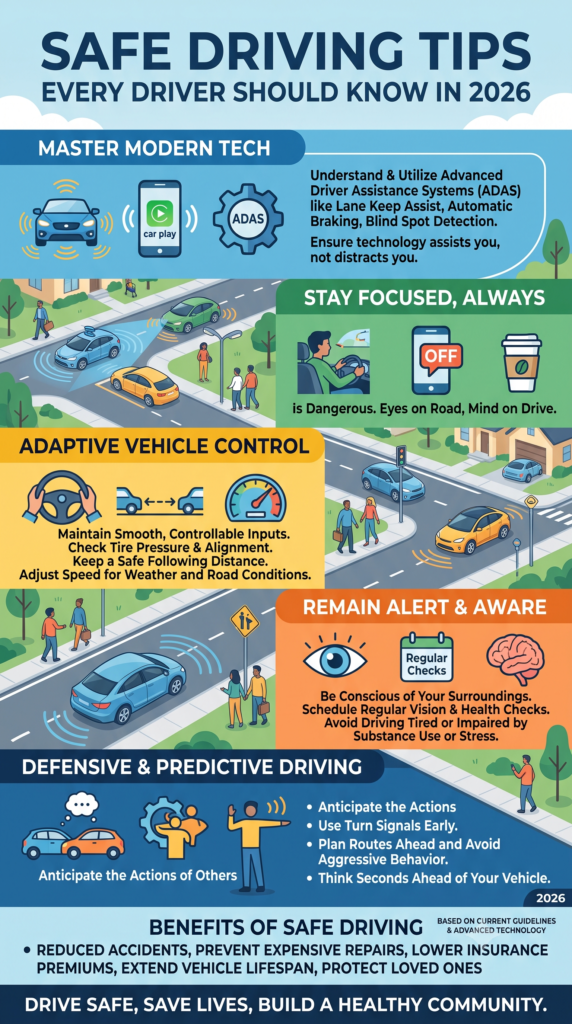
Safe Driving Tips Every Driver Should Know in 2026
Road safety is a responsibility shared by every driver. Whether you are an experienced motorist or someone who has recently obtained a driving license, following safe driving tips can significantly reduce the risk of accidents and make every journey more enjoyable. Every year, millions of road accidents occur due to distracted driving, speeding, poor vehicle maintenance, and failure to follow traffic rules. Fortunately, many of these incidents are preventable through responsible driving habits.
Learning and applying safe driving tips not only protects you but also safeguards your passengers, pedestrians, cyclists, and other road users. Safe driving involves more than simply obeying traffic laws—it requires awareness, patience, proper vehicle maintenance, and good decision-making in every situation.
In this comprehensive guide, we’ll explore the most important safe driving tips that every driver should follow in 2026.
Why Safe Driving Is Important
Driving safely helps reduce accidents, injuries, and unnecessary expenses. Responsible driving also improves traffic flow and creates a safer environment for everyone.
Benefits of safe driving include:
- Fewer road accidents
- Lower repair costs
- Reduced insurance claims
- Better fuel efficiency
- Increased confidence behind the wheel
- Protection for passengers and pedestrians
Every safe decision you make contributes to a safer road for everyone.
Always Wear Your Seat Belt
One of the simplest yet most effective safe driving tips is wearing a seat belt.
Seat belts significantly reduce the risk of serious injuries during collisions.
Make sure that:
- The driver wears a seat belt.
- Every passenger is properly buckled.
- Children use approved child safety seats.
- Seat belts are correctly adjusted.
Even short trips require proper seat belt use.
Follow Speed Limits
Speeding remains one of the leading causes of road accidents.
Driving within the speed limit gives you more time to react to unexpected situations such as:
- Sudden braking
- Crossing pedestrians
- Animals on the road
- Road construction
- Poor weather
Remember that speed limits are designed to maximize safety rather than inconvenience drivers.
Avoid Distracted Driving
Modern technology has introduced many distractions inside vehicles.
Avoid:
- Using mobile phones
- Sending text messages
- Browsing social media
- Eating while driving
- Adjusting navigation systems unnecessarily
Keep your attention focused entirely on the road.
If you need to make a call or respond to a message, safely park your vehicle first.
Never Drive Under the Influence
Alcohol and drugs reduce reaction time, impair judgment, and increase accident risk.
Even small amounts of alcohol can affect your ability to drive safely.
If you plan to drink:
- Arrange a designated driver.
- Use public transportation.
- Book a taxi or ride-sharing service.
Never risk your life or the lives of others by driving while impaired.
Maintain a Safe Following Distance
Tailgating is a common cause of rear-end collisions.
Maintain enough distance from the vehicle ahead to allow sufficient braking time.
A good rule is the three-second rule, increasing the gap during rain, fog, or heavy traffic.
Greater following distance improves reaction time and reduces collision risk.
Obey Traffic Signals and Road Signs
Traffic signs and signals exist to maintain order and safety.
Always:
- Stop at red lights.
- Yield when required.
- Respect stop signs.
- Follow lane markings.
- Observe speed limits.
Ignoring traffic rules endangers everyone on the road.
Keep Your Vehicle Well Maintained
A properly maintained vehicle is far safer than one with neglected mechanical problems.
Regular maintenance includes:
- Brake inspections
- Tire pressure checks
- Engine oil replacement
- Battery inspection
- Headlight testing
- Windshield wiper replacement
Mechanical failures can often be prevented through routine servicing.
Drive According to Weather Conditions
Rain, fog, snow, and strong winds require extra caution.
During bad weather:
- Reduce speed.
- Increase following distance.
- Turn on headlights when necessary.
- Avoid sudden braking.
- Use windshield wipers effectively.
Adapting your driving style to road conditions is one of the most valuable safe driving tips.
Avoid Fatigue While Driving
Driving while tired can be just as dangerous as driving under the influence.
Signs of fatigue include:
- Frequent yawning
- Difficulty concentrating
- Heavy eyelids
- Drifting between lanes
If you begin feeling sleepy:
- Take a break.
- Stretch your legs.
- Drink water.
- Rest before continuing.
Never force yourself to drive when exhausted.
Use Mirrors Properly
Regularly checking mirrors helps you stay aware of surrounding traffic.
Adjust your:
- Rear-view mirror
- Left side mirror
- Right side mirror
Check blind spots before changing lanes.
Good observation prevents many avoidable accidents.
Stay Calm in Traffic
Heavy traffic often leads to frustration.
Avoid:
- Aggressive acceleration
- Excessive horn use
- Road rage
- Unsafe overtaking
Remaining calm improves decision-making and creates a safer driving environment.
Use Indicators Correctly
Always signal your intentions before:
- Turning
- Changing lanes
- Overtaking
- Merging into traffic
Indicators help other drivers predict your movements and reduce misunderstandings.
Be Extra Careful Around Pedestrians
Pedestrians are among the most vulnerable road users.
Always:
- Slow down near schools.
- Stop at pedestrian crossings.
- Watch for children.
- Yield where required.
Protecting pedestrians should always remain a priority.
Drive Defensively
Defensive driving means anticipating potential hazards before they become dangerous.
A defensive driver:
- Watches traffic carefully.
- Predicts possible risks.
- Maintains safe distances.
- Avoids aggressive behavior.
- Plans escape routes.
Defensive driving reduces accident risk significantly.
Keep Emergency Equipment
Every vehicle should carry basic emergency supplies.
Recommended items include:
- First-aid kit
- Flashlight
- Tire inflator
- Jumper cables
- Reflective warning triangle
- Emergency contact numbers
Being prepared can make a stressful situation easier to handle.
Respect Other Road Users
Road safety depends on cooperation.
Show courtesy toward:
- Cyclists
- Motorcyclists
- Trucks
- Buses
- Pedestrians
Patience and respect help prevent unnecessary conflicts.
Common Driving Mistakes to Avoid
Many accidents occur because of simple mistakes.
Avoid:
- Speeding
- Tailgating
- Distracted driving
- Ignoring mirrors
- Driving while tired
- Sudden lane changes
- Failing to signal
- Ignoring warning lights
Correcting these habits greatly improves road safety.
Technology That Improves Safety
Modern vehicles include advanced safety features such as:
- Automatic Emergency Braking
- Lane Keep Assist
- Blind Spot Monitoring
- Adaptive Cruise Control
- Parking Sensors
- Rear Cameras
- Driver Attention Monitoring
While these technologies are helpful, they should never replace attentive driving.
Frequently Asked Questions
What is the most important safe driving tip?
Staying alert and avoiding distractions is one of the most effective ways to reduce accident risk.
Why is defensive driving important?
Defensive driving helps drivers anticipate hazards and respond safely to unexpected situations.
How often should I inspect my vehicle?
Basic inspections such as tire pressure, lights, and fluid levels should be performed regularly, while full servicing should follow the manufacturer’s maintenance schedule.
Is using a mobile phone while driving dangerous?
Yes. Even a brief distraction can increase the likelihood of an accident. Always avoid using your phone unless you have safely parked.
How can I improve my driving skills?
Practice regularly, follow traffic laws, maintain your vehicle, and continue learning safe driving techniques.
Conclusion
Following these safe driving tips can make every journey safer, more comfortable, and less stressful. Safe driving is not only about following traffic rules but also about maintaining your vehicle, staying alert, respecting other road users, and making responsible decisions behind the wheel.
By adopting good driving habits today, you can reduce accident risks, lower maintenance costs, improve fuel efficiency, and protect yourself along with everyone sharing the road. Whether you drive daily or occasionally, consistently applying these safe driving tips will help you become a more confident, responsible, and skilled driver.
Yoast SEO Settings
Focus Keyphrase: Safe Driving Tips
SEO Title: Safe Driving Tips Every Driver Should Know in 2026
Slug: safe-driving-tips
Meta Description: Discover the best safe driving tips to improve road safety, prevent accidents, protect passengers, and become a more responsible driver in 2026.
Suggested Internal Links
- Car Maintenance Checklist Every Owner Should Follow
- Best Family Cars to Buy in 2026
- How to Improve Your Car’s Fuel Efficiency
Suggested Image Alt Text
- Safe driving tips on highway
- Driver wearing seat belt
- Defensive driving techniques
- Road safety signs
- Safe driving during rainy weather
Yoast Tip: Use the exact focus keyphrase “Safe Driving Tips” around 8–12 times in this article, include it in the introduction, one or two subheadings, the conclusion, SEO title, slug, and meta description. Avoid repeating it in every heading to prevent over-optimization.