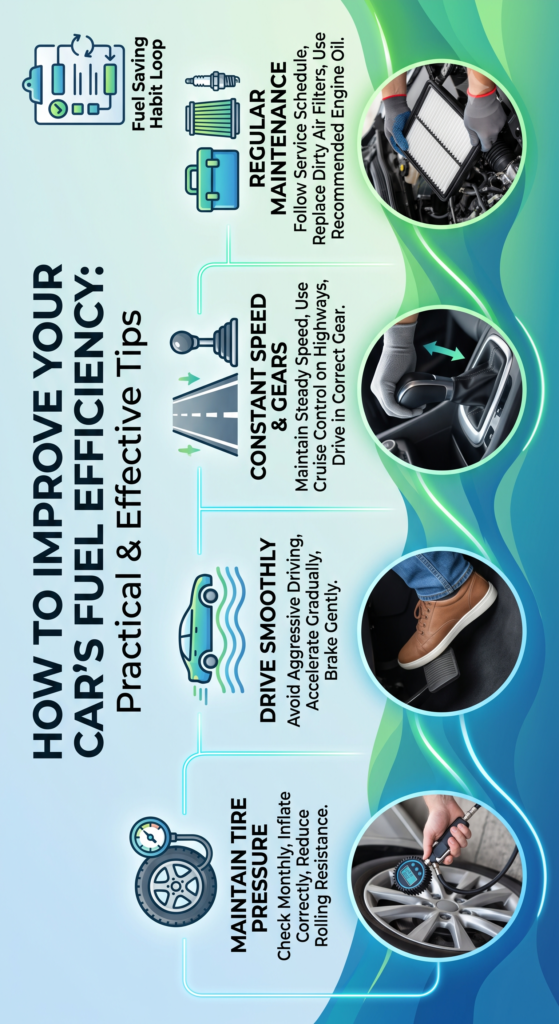
How to Improve Your Car’s Fuel Efficiency
Fuel prices continue to rise, making it more important than ever for drivers to find ways to reduce fuel consumption. Whether you own a petrol, diesel, or hybrid vehicle, learning how to improve car fuel efficiency can save you money while also reducing your environmental impact. Small changes in driving habits and regular vehicle maintenance can make a noticeable difference over time.
Many people believe that improving fuel efficiency requires expensive modifications, but that’s not true. In most cases, adopting better driving practices and following a proper maintenance schedule are enough to achieve significant savings. Understanding how to improve car fuel efficiency helps extend your vehicle’s lifespan, lower operating costs, and contribute to cleaner air.
In this complete guide, we’ll explore practical and proven methods to help every driver improve car fuel efficiency without compromising comfort or performance.
Why Fuel Efficiency Matters
Fuel efficiency refers to how effectively your vehicle uses fuel to travel a certain distance. A fuel-efficient car consumes less fuel while covering the same number of kilometers.
Improving fuel efficiency offers several advantages, including:
- Lower fuel expenses
- Reduced carbon emissions
- Longer engine life
- Better vehicle performance
- Reduced dependence on fossil fuels
- Lower maintenance costs
Whether you drive daily or only occasionally, improving fuel economy benefits both your wallet and the environment.
Keep Your Tires Properly Inflated
One of the easiest ways to improve car fuel efficiency is by maintaining the correct tire pressure.
Underinflated tires create greater rolling resistance, forcing the engine to work harder and consume more fuel.
Check your tire pressure:
- At least once every month
- Before long trips
- When carrying heavy loads
Always inflate tires according to the manufacturer’s recommended pressure, which can usually be found inside the driver’s door or in the owner’s manual.
Benefits of Proper Tire Pressure
- Better fuel economy
- Improved handling
- Longer tire life
- Increased safety
- Better braking performance
Drive Smoothly
Aggressive driving is one of the biggest reasons for excessive fuel consumption.
Sudden acceleration and hard braking waste energy and force the engine to burn more fuel.
Practice smooth driving by:
- Accelerating gradually
- Maintaining a steady speed
- Anticipating traffic conditions
- Braking gently whenever possible
Smooth driving not only improves fuel economy but also reduces wear on your brakes and tires.
Maintain a Constant Speed
Frequent speed changes reduce fuel efficiency.
When driving on highways, maintaining a consistent speed helps the engine operate more efficiently.
If your vehicle is equipped with cruise control, use it during long highway journeys whenever road conditions permit.
Driving at a constant speed can significantly improve car fuel efficiency, especially on long trips.
Avoid Excessive Idling
Many drivers leave their engines running while waiting in traffic or parked.
Modern engines consume fuel even when the vehicle is stationary.
If you expect to remain stopped for more than a minute, turning off the engine can help conserve fuel, provided it is safe and practical to do so.
Reducing unnecessary idling is a simple habit that contributes to better fuel economy.
Reduce Excess Weight
Extra weight requires additional engine power, leading to increased fuel consumption.
Remove unnecessary items from your vehicle, including:
- Heavy tools
- Sports equipment
- Unused luggage
- Boxes
- Roof racks when not in use
Even modest weight reduction can positively impact fuel efficiency, particularly during city driving.
Keep Up with Regular Maintenance
Routine maintenance is essential if you want to improve car fuel efficiency.
A well-maintained engine operates more efficiently and consumes less fuel.
Regular maintenance includes:
- Engine oil changes
- Air filter replacement
- Spark plug inspection
- Fuel system cleaning
- Coolant checks
- Scheduled servicing
Following the manufacturer’s recommended service intervals helps keep your vehicle running at peak efficiency.
Replace Dirty Air Filters
The engine requires a proper supply of clean air for efficient combustion.
A clogged air filter restricts airflow, reducing engine performance and increasing fuel consumption.
Replacing the air filter at recommended intervals helps:
- Improve engine performance
- Increase acceleration
- Reduce fuel usage
- Extend engine life
A clean air filter is a simple yet effective way to improve fuel economy.
Use the Recommended Engine Oil
Engine oil reduces friction between moving parts.
Using the oil grade recommended by the manufacturer ensures optimal lubrication and engine performance.
Old or incorrect engine oil increases friction, causing the engine to work harder and burn more fuel.
Always replace engine oil according to the service schedule.
Plan Your Trips Efficiently
Multiple short trips often consume more fuel than one longer journey.
Cold engines use more fuel during the first few minutes of operation.
Combining errands into a single trip helps:
- Reduce fuel consumption
- Save time
- Minimize engine wear
Route planning also allows you to avoid heavy traffic and unnecessary detours.
Avoid High Speeds
Although modern vehicles perform well at highway speeds, fuel efficiency decreases as speed increases.
Driving significantly above the speed limit increases air resistance, forcing the engine to consume more fuel.
Maintaining moderate speeds helps improve overall fuel economy.
Use Air Conditioning Wisely
Air conditioning increases engine load, especially during city driving.
To reduce fuel consumption:
- Use the air conditioner only when necessary.
- Park in shaded areas to keep the cabin cooler.
- Ventilate the vehicle before switching on the air conditioning.
On highways, using air conditioning is often more efficient than driving with all windows fully open, as open windows increase aerodynamic drag.
Check Wheel Alignment
Poor wheel alignment causes tires to drag instead of rolling smoothly.
This increases rolling resistance and fuel consumption.
Signs of poor alignment include:
- Vehicle pulling to one side
- Uneven tire wear
- Off-center steering wheel
Regular wheel alignment improves both fuel efficiency and tire life.
Replace Worn Spark Plugs
For petrol vehicles, spark plugs play an essential role in fuel combustion.
Old or worn spark plugs may cause:
- Poor acceleration
- Rough engine performance
- Increased fuel consumption
- Engine misfires
Replacing spark plugs at recommended intervals helps maintain efficient engine operation.
Monitor Fuel Quality
Using high-quality fuel from reputable stations helps maintain engine cleanliness and performance.
Poor-quality fuel can leave deposits that reduce combustion efficiency over time.
Follow your vehicle manufacturer’s recommendations regarding fuel type and octane rating.
Limit Roof Cargo
Roof boxes, bicycle carriers, and roof racks increase aerodynamic drag.
Even when empty, roof accessories reduce fuel efficiency.
Remove unused roof equipment whenever possible to improve airflow around the vehicle.
Drive in the Correct Gear
Manual transmission drivers should shift gears smoothly and avoid keeping the engine at unnecessarily high RPM.
Driving in the correct gear reduces engine strain and improves fuel economy.
Automatic transmission vehicles also perform best when driven smoothly without sudden acceleration.
Monitor Your Fuel Economy
Many modern vehicles display real-time fuel consumption information.
Monitoring these readings helps you understand how different driving habits affect fuel usage.
Keeping track of fuel efficiency encourages better driving behavior over time.
Common Mistakes That Waste Fuel
Avoid these common habits that reduce fuel efficiency:
- Rapid acceleration
- Hard braking
- Driving with underinflated tires
- Carrying unnecessary weight
- Ignoring scheduled maintenance
- Driving aggressively in traffic
- Excessive engine idling
- Delaying air filter replacement
Correcting these habits can produce immediate improvements in fuel economy.
Benefits of Improving Fuel Efficiency
Learning how to improve car fuel efficiency offers several long-term benefits.